When you are coming to prepare your company's HMRC returns you may have seen the word 'iXBRL' scattered about when HMRC are referring to the company accounts and Corporation Tax submissions. There can be a lot of confusion on what iXBRL actually means but today we will alleviate your confusion.
What does iXBRL stand for?
First and foremost, understanding what the acronym stands for is the best place to start expanding your knowledge of what iXBRL tagging actually is. The acronym stands for Inline eXtensible Business Reporting Language.
What does iXBRL tagging do?
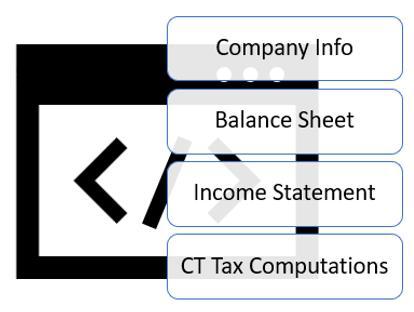 The purpose of iXBRL tagging is that it embeds a machine-readable digital label to specific titles within a HTML version of an entities returns which it submits to HMRC, such as company accounts and tax returns.
iXBRL then ensures that the documents prepared by an entity are capable of being read by both computers (in the iXBRL format) and humans (in the HTML format) with ease.
The iXBRL tags are then processed, analysed and validated by HMRC's computers upon submission of the returns. This enables HMRC to handle the tax returns and accompanying company accounts for more than 5.5 million private sector businesses incorporated within the UK.
The core function of iXBRL tagging is to empower regulators by automating the analysis of financial data submitted by entities ensuring their compliance with the relevant legislation and regulations. By adopting a computer based analysis it also helps regulators to reduce human error by rejecting returns which have been completed incorrectly throughout the data analysis process.
Examples of specific iXBRL tagged items
Below are examples of specific items that are iXBRL tagged within company accounts and tax computations for HMRC end of year company returns submissions:
Entity Information:
- The Entity Name - This is the registered name of the entity
- The Company Registration Number (CRN) - This is the 8 character code given to each entity incorporated with Companies House
- The Accounting Period - This is the date that the reporting period runs from and to
- The Entity's Officer Names - These are the names of the relevant directors during the period
- The Currency - Principal Current for UK Limited accounts is GBP
- Principal Activity of the Company (SIC) - This is the 5 digit code which outlines the activity that the entity undertakes through its trading
- Number of Employees - The average number of employees that the business had during the given accounting period
Balance Sheet:
- The Fixed Assets - Intangible Assets (Goodwill & Intellectual Property) and Tangible Assets (Plant, Property & Equipment)
- The Current Assets - Stock/Inventory, debtors & cash at bank/in hand
- Creditors - This includes amounts falling due within a year as well as those falling due after one year (Mortgages & Bank Loans)
- Net Assets - This is the total assets minus the total liabilities
- Capital & Reserves - This is the called up share capital + Share Premium + Net Profit/(Loss) + Retained Earnings
Income Statement:
- Turnover - Total Sales
- Cost of Sales - Direct Costs
- Gross Profit/(Loss) - Turnover minus Cost of Sales
- Administrative Expenses & Distribution Costs
- Operating Profit/(Loss)
- Interest Payable/Receivable
- Taxation - The tax on the profit
- Profit/(Loss) for the period
Corporation Tax Computations:
The tax computations which are part of the corporation tax return must be tagged to show how the figures within the accounts are used to calculated the taxable profit.
- Detailed Profit & Loss
- Capital Allowances - Tagging of the calculations for tax relief on assets
- Adjustments to Profit - Taxable Income with Disallowable Expenses added to the taxable income
- Tax Reconciliation - Moving from accounting profit to tax liability
Looking For Further Information?
Hopefully you have enjoyed this article today. If you are looking for more information on topics related to the technical side of running your small business, feel free to explore our Knowledge Base. If you are looking for any further information, do not hesitate to contact us.