
So, what is Share Capital?
By definition, share capital is the amount of money a company raised by issuing shares to it's "shareholders". When a shareholder purchases company shares they are essentially investing in that company. Shares can be split between multiple investors (shareholders) of the company. The money each shareholder contributes to the company acts a financial basis, and is the very catalyst on the businesses growth.
Amount of Shares Issued
In addition, multiple shares can be issued by a company, for instance, say a company issues 100 shares each at £2, the total share capital amount comes to £200, where each company share represents a percentage of the company ownership. - These can be split by multiple different shareholders, however, It's important to note that in this case 100 shares does not mean 100 different shareholders, shareholders can purchase multiple company shares.
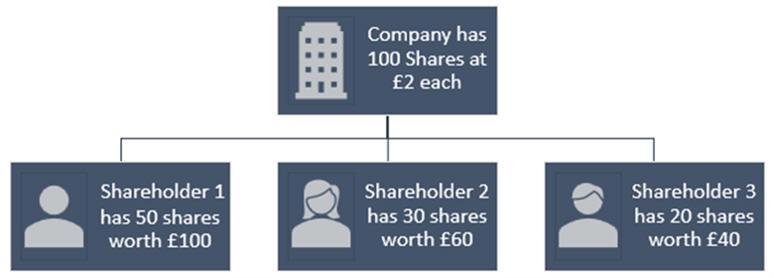
In a lot of cases, companies will only have one share, which is typically the minimum requirement; this one share would represent 100% of the company. Whereas if the company has multiple shares it divides the company by that amount.
Types of Share Capital
Issued Share Capital
This refers to the total amount of shares that the company issues to it's shareholders upon incorporation.
Called Up Share Capital
This is the portion of the company share capital that shareholders are expected to pay. Not all companies expect the full amount of shares to be paid upfront, the remaining amount of shares expected to be paid is the "called up" share capital.
Paid vs Unpaid Share Capital
Paid company share capital refers to the portion of "called-up share capital" that has been paid by the shareholders. Whereas any unpaid share capital refers to the "called-up share capital" that is still outstanding.
It's important to know the differences between these types of share capital, for when it comes time to submit your company accounts to Companies House!
Ordinary Shares vs Preference Shares
Ordinary Shares
These are the more common type of shares (or rather shareholder) that a company has when incorporating. A holder or an ordinary company share will have equal voting rights with other shareholders "one vote per share". These shareholders have a right to the company profits and can usually receive dividends that are distributed by the business.
Additionally, if the company were to go into liquidation, then ordinary holders would be be paid last, once all potential creditors and preference shareholders (this will be covered in the next section!) have been paid off
Preference Shares
Preference shares is essentially the opposite ordinary shares, based on what these holders are entitled to. Preference shareholders do not often carry voting rights like ordinary ones do. However, these holders will receive a 'preferential' amount of dividends that has already been established each time the company distributes profit and additionally if the company were to go into liquidation, the preference holder would receive an already established pay out before any other creditors/holders are paid off.
It's important to note that, preference shareholders have conservation rights, meaning that they can be converted into ordinary holders if they such require!
Capital From Shares
Typically money the company receives once the shareholders have paid back the shares issued, will allow the company to invest in purchases to help start of the business. This is referred to as 'Capital from Shares'.
For example these expenses could include:
- Purchasing assets for the company like equipment, computers etc.
- Costs of professional fees like accountancy fees or insurance.
- Direct costs for the products the company wants to sell for example.
Accounting for Share Capital
At the point of incorporation, shareholders can decide whether they want to pay the share capital upfront or at a later date. It is important to accurately reflect the amount of shares that has been paid/unpaid when reporting your annual accounts to both Companies House and HMRC.
Through our software, you will be able to complete and submit your company accounts
Accounts Example (Balance Sheet):
Let's say your company issues £100 of share capital (£10 of shares each to 10 share holders) upon incorporation and you are looking to submit your first year accounts.
Share capital is always recorded in the Balance Sheet of the company accounts (not the Profit and Loss Statement), and typically this is the first thing accounted for in Balance Sheet.
If the total amount of shares have been paid already (when the shares were issued) then this will need to be reflected in the 'Current Assets' section. Since both sides of the Balance Sheet will need to 'balance' the share capital will also need to be reflected in the 'Capital and Reserves' section.
Please see below how this is recorded using our easy-to-use filing templates:
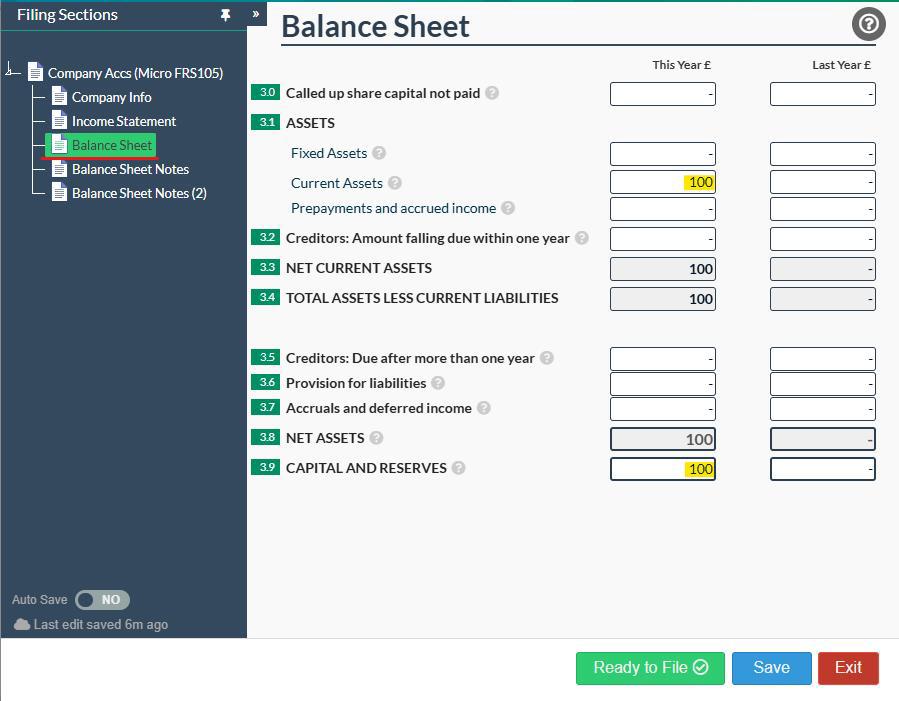
However, if the called-up shares were not paid when incorporated, then they will need to be reflected in a different section than the Current Assets; the 'Called up share capital not paid' section instead. The full amount will still need to be reflected in the Capital and Reserves:

If the share capital is still outstanding in future accounting periods, then you would need to keep the amount in the 'Called up share capital not paid'. Then once it has been paid off, it can be moved to the 'Current Assets'.
Once the share capital has been recorded, now you are free to complete the rest of the company accounts (including the Profit and Loss Statement and the remainder of the Balance Sheet).
Are Shares Required for a Limited Company?
For most limited companies, shares are required when incorporating a business. Typically, the company must have at least one share with an initial share holder. However some companies are limited by 'guarantee' instead of shares.
"Limited By Guarantee"
Not all limited companies are limited due to distribution of shares, and instead by "guarantee". Typically, these would be companies like non-profit organisations (charities or community projects) who have guarantors rather than shareholders. These guarantors would agree to a set nominal amount of money that would be paid if the company closes down.
Final Note on Share Capital
Please note that issuing share capital for a company is the directors full and legal responsibility. It is up to the company to decide the amount of shares and how these are allotted and it would be best to look for legal and tax advice if you require further information on this.